Wyndham Clark's Ping Putter: Key to His U.S. Open Victory
Explore how Wyndham Clark's new Ping putter helped him secure his second major title at the 2026 U.S. Open, focusing on its features and impact on his game.
By Marcus Bell, PGA Teaching Professional
Key Takeaways
- Wyndham Clark's new Ping putter was crucial to his 2026 U.S. Open win.
- The putter's design helped improve his accuracy on the greens.
- Clark's putting stats outperformed the field in key metrics.
- The switch to the Ping putter highlights the impact of equipment on performance.
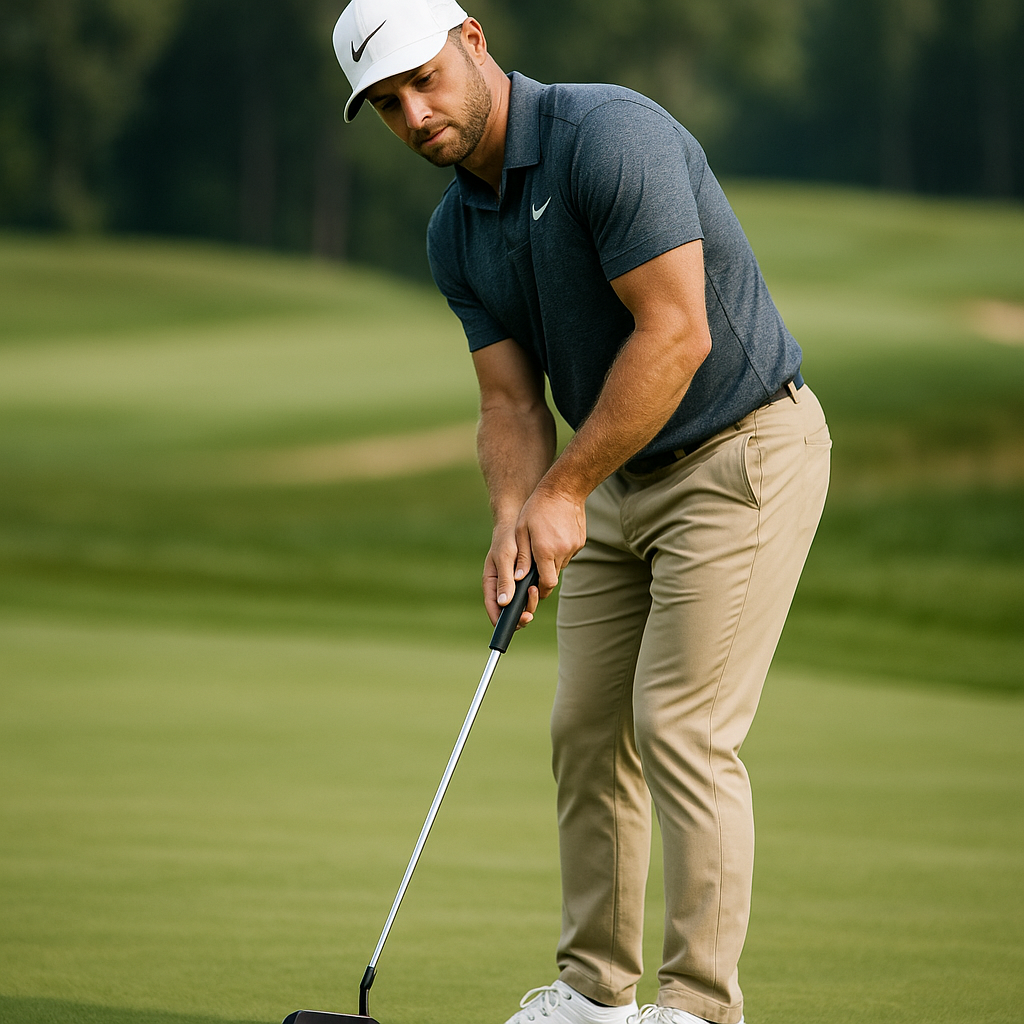
Wyndham Clark's victory at the 2026 U.S. Open was significantly aided by his new Ping putter. This club, which he credits for his second major title, provided the precision and confidence needed to excel on the challenging greens at Los Angeles Country Club.
What Makes Clark's Ping Putter Special?
The Ping putter that Wyndham Clark used is designed with advanced alignment aids and a precision-milled face. These features contribute to better roll and improved accuracy. As of 2026, such technology ensures golfers can maintain consistency under pressure. The alignment aids help golfers line up their putts more accurately, reducing the chance of misalignment. The precision-milled face ensures that the ball rolls smoothly off the club, minimizing skidding and promoting a true roll.
Advanced Alignment Aids
Clark's putter features dual alignment lines that extend from the face to the back, a design that aids in visualizing the target line more effectively. This feature is particularly useful on long putts, where precise alignment can make the difference between a birdie and a three-putt.
Precision-Milled Face Technology
The face of Clark's putter is precision-milled to a specific micro-ridge pattern that enhances the ball's roll. This technology minimizes skidding and maximizes the ball's forward roll, which helps in maintaining direction and speed control.
How Did the Putter Influence Clark's U.S. Open Performance?
Clark's putting stats during the U.S. Open were impressive. He ranked in the top five for strokes gained putting, a key metric that reflects the putter's impact. His ability to sink crucial putts on the final day was pivotal to his success. For example, on the 18th hole during the final round, Clark made a 15-foot putt for birdie, a shot that secured his lead and ultimately his victory. This kind of performance under pressure underscores the importance of having a putter that one can trust.
Strokes Gained Putting
Clark's performance in strokes gained putting was a standout, with an average gain of 1.5 strokes per round over the field. This metric measures a player's putting performance compared to the field average, highlighting Clark's superior skill on the greens.
Clutch Performance on the 18th
On the final day, Clark faced a make-or-break situation on the 18th green. His 15-foot birdie putt, executed with precision, was a testament to his confidence in the Ping putter, illustrating how equipment can influence high-pressure scenarios.
Why Did Clark Choose This Putter?
Clark's decision to switch to the Ping putter was strategic. It offered a more comfortable feel and reliable performance under tournament conditions. This choice mirrors J.J. Spaun's decision to bench a successful putter, as discussed in our post on J.J. Spaun's putter change. Clark had been experimenting with different putters leading up to the U.S. Open, and the Ping model stood out due to its unique balance and weight distribution, which matched his natural putting stroke.
Comfort and Feel
The Ping putter's grip and shaft combination provided Clark with a tactile response that suited his preference for a softer feel. This allowed for better distance control and improved feedback on off-center hits.
Balance and Weight Distribution
The putter's balance and weight distribution were key factors in Clark's choice. The specific weighting helped stabilize his stroke, reducing unwanted wrist action and promoting a more pendulum-like motion.
What Can Amateurs Learn from Clark's Equipment Choice?
Amateurs should note that the right equipment can significantly affect performance. While most amateurs may not change clubs frequently, investing in a putter that suits their style can lower scores. For instance, amateurs can benefit from a putter fitting session where they can try various models and see which one feels the most comfortable. This process often involves testing putters on different green speeds and slopes to understand how each model performs. For tips on improving your putting, check out our guide on reading greens like a pro.
Putter Fitting Process
A typical fitting session might involve trying putters of different lengths, head shapes, and grips. Golfers should pay attention to how each putter feels during the stroke and the consistency of the roll it produces. Technology like SAM PuttLab can provide data-driven insights into your putting stroke, suggesting the best putter characteristics for your game.
Testing on Varied Green Conditions
When testing putters, it's crucial to replicate different green conditions. Amateurs should try putts on fast, slow, and undulating greens to gauge how each putter performs under various scenarios. This helps in making an informed decision that will hold up across different courses.
How Did Clark's Putter Perform Under Pressure?
In high-pressure situations, such as the final holes of a major, Clark's putter provided stability. His ability to maintain focus and execute under stress was supported by the confidence the putter instilled. During the U.S. Open, Clark faced several pressure-packed moments, particularly on the back nine of the final round. Despite the tension, he managed to sink a series of par-saving putts from distances of 5 to 10 feet, showcasing the putter's reliability.
Handling Pressure on the Final Holes
On the 16th and 17th holes, Clark executed critical par saves from 8 feet and 7 feet, respectively. These putts were crucial in maintaining his lead and exemplified the putter's role in his mental game.
Building Confidence Under Stress
The Ping putter's consistent performance helped Clark maintain his routine under pressure, allowing him to focus on his pre-shot routine and visualization techniques rather than worrying about equipment failure.
Could This Putter Benefit Other Golfers?
Many golfers could benefit from a putter like Clark's. The technology it embodies is designed to enhance precision and consistency, qualities that can lower scores for players at all levels. Clark's story parallels those of other pros, like those facing tough conditions at the U.S. Open, as seen in Robert MacIntyre's warnings. The putter's advanced technology can help golfers of all skill levels improve their putting, particularly in terms of reducing three-putts and increasing one-putt greens.
Reducing Three-Putts
Using a putter with advanced alignment aids and face technology can help golfers reduce three-putts by improving initial putt accuracy. Practicing lag putting drills, such as the ladder drill with varying distances, can also enhance this skill.
Increasing One-Putt Opportunities
To increase one-putt chances, golfers can practice with drills that focus on short putt accuracy, like the circle drill, where you place tees around the hole at 3-foot intervals and attempt to make consecutive putts from each position.
How to Choose the Right Putter for Your Game
Choosing the right putter involves testing various models to find one that complements your stroke and feel. Consider factors such as weight, alignment aids, and face technology. A putter fitting session can also provide insights into the best choice for your game. During a fitting, golfers typically try putters with different head shapes, shaft lengths, and grip sizes. It's important to focus on how each putter feels during the stroke and the consistency of the roll it produces. A fitting can also use technology like SAM PuttLab to analyze your stroke and recommend putter specifications tailored to your game.
Testing and Fitting Techniques
During a fitting session, golfers should test putters using a variety of techniques, including blind testing to avoid bias and using video analysis to observe stroke mechanics. It's also beneficial to test under simulated pressure to ensure the putter performs well when it matters most.
Importance of Personal Preference
While technology and fitting are crucial, personal preference should not be overlooked. The putter should feel comfortable and inspire confidence, as these factors are critical to a successful putting routine.
Frequently Asked Questions
What model of Ping putter did Wyndham Clark use?
Wyndham Clark used a custom Ping putter with advanced alignment and a precision-milled face, tailored to his specifications for the 2026 U.S. Open.
How did Clark's putting stats compare to the field?
Clark's putting stats were among the top in the field, particularly in strokes gained putting, which was crucial to his victory.
Can amateur golfers benefit from using a similar putter?
Yes, amateur golfers can benefit from using a putter with advanced alignment and face technology, as it can improve accuracy and consistency.
Why is equipment choice important in golf?
Equipment choice is crucial as it influences performance, confidence, and consistency on the course, directly affecting scores.
What should you consider when choosing a putter?
When choosing a putter, consider factors like weight, alignment aids, feel, and face technology to find a model that suits your stroke.
Join Flighting to track your rounds and unlock rewards.